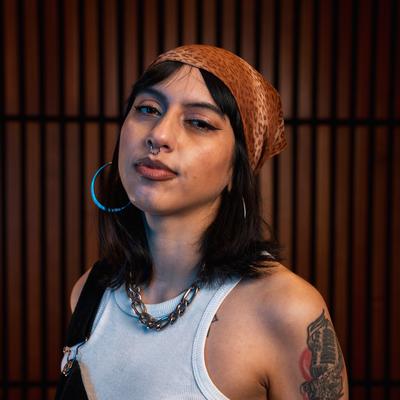
I'm Danillo Lima, a journalist with a Master's degree in Communication, researching Latin American communication theories. I write music criticism focusing on Brazilian music. I understand criticism less as a quality assessment and more as ...cultural interpretation: reconstructing contexts, mapping aesthetics, and understanding what the work says about the present.
Articles and content will be published on Substack (substack.com/@danillolima), with longer essays, and on Instagram (@danillolimaexp), with critical carousels, guides, and timelines. I have 6,000 followers on Instagram, with an average of 200,000 views per month.
My content is published approximately one essay per month on Substack and two to three carousels per week on Instagram. The types and formats of the articles are critical essays on albums, artists, and scenes.
What artists receive is an in-depth critical reading, not a generic review or a rating. Depending on the work, this could become an essay on Substack, a dedicated carousel, a mention in guides and thematic lists, or an interview. The artist is always tagged and credited, and the material can be used by them for promotion.
The genres, moods, and characteristics I look for are: MPB (Brazilian Popular Music), samba, jazz, soul/funk, rap, peripheral scenes like piseiro, brega, funk, and experimental electronic music. I'm also interested in Latin American music, jazz, rock, prog, experimental, and pop that takes risks in form. I look for tracks with friction: improbable mixtures, textures, technical limitations transformed into language (makeshift solutions as an aesthetic), melancholy and a sense of ruin, and works that imagine futures.
Not my field: indie rock, metal, shoegaze, and post-rock. I have no interest in things that sound like Animal Collective, Godspeed You! Black Emperor, or Opeth.
My background stems from academic research in Latin American communication, which provides me with a theoretical foundation for interpreting music as part of broader cultural and media dynamics. Recently, I have shifted my focus to cultural criticism, developing an expanded music criticism project that understands Brazil as a laboratory of aesthetic invention and treats listening as a gesture of deceleration in the age of algorithms.

Meridian Brothers
Metá Metá
Tantão e os Fita
Sessa
Negro Léo
Ana Frango Elétrico
SIBA
Don L